Same game, different names
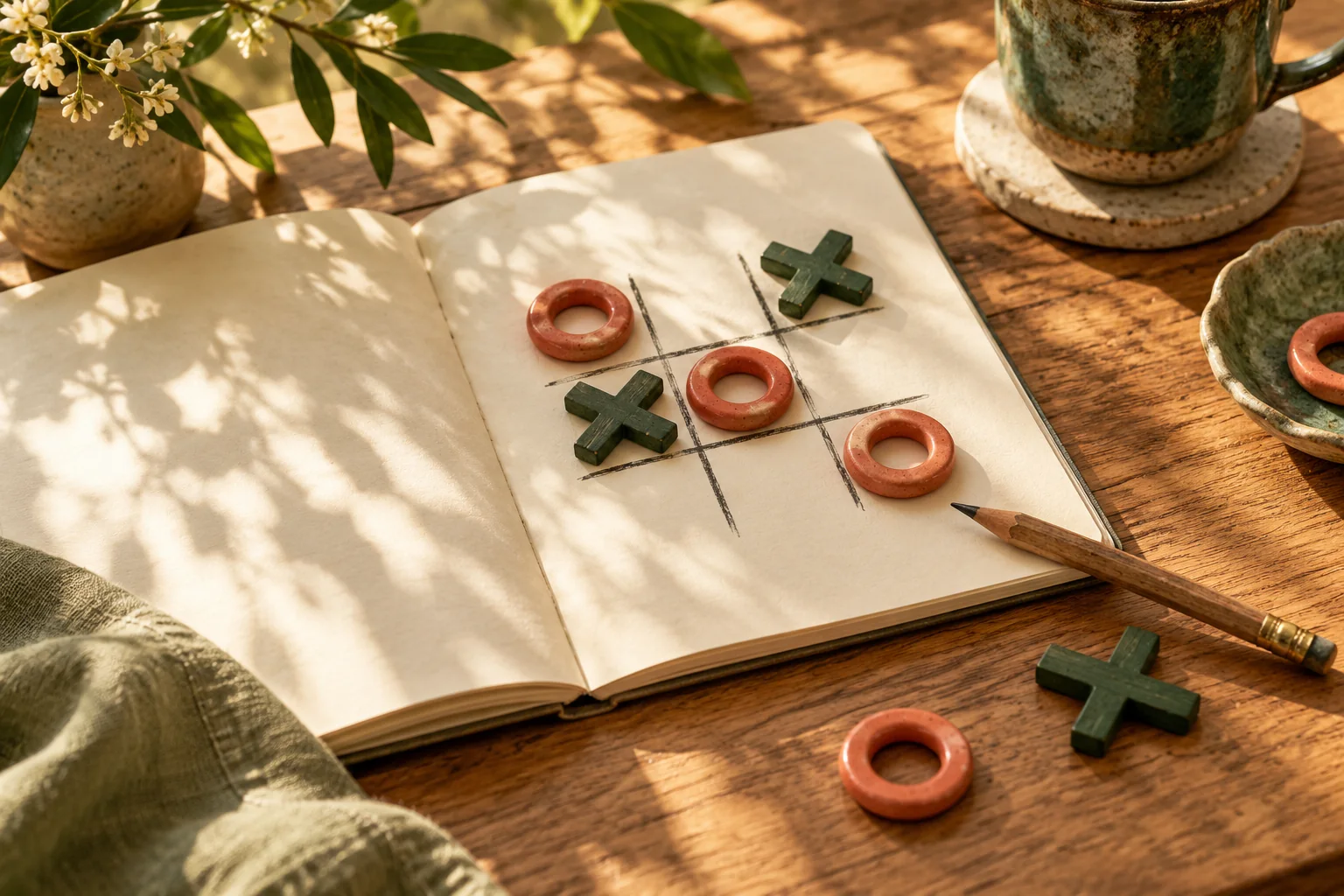
If you grew up calling it noughts and crosses, you already know tic-tac-toe. It is the same little 3×3 game: take turns adding X or O to an empty square, and try to get three in a row. Fill the board without a winner and it is a draw.
You might also see it called tic tac toe, an XO game or simply X and O. Play with someone beside you or take on the computer: the familiar idea is the same. Once the boards get bigger, have a quick look at the rules. The number you need in a row can change.
Sources: [5]
Did people play it in ancient times?
People were enjoying board games thousands of years before anyone could lose a pencil down the back of the sofa. The Met has pieces, boards and pictures connected with Egyptian games such as Senet and Mehen. There is plenty of real history to enjoy here.
The tricky bit is knowing exactly what people played on a particular board. A grid scratched into stone has usually lost its instruction booklet, if it ever had one. We can admire the resemblance to games we know, while leaving a little room for the things we cannot be sure about.
Sources: [1]

The Romans liked a game, too
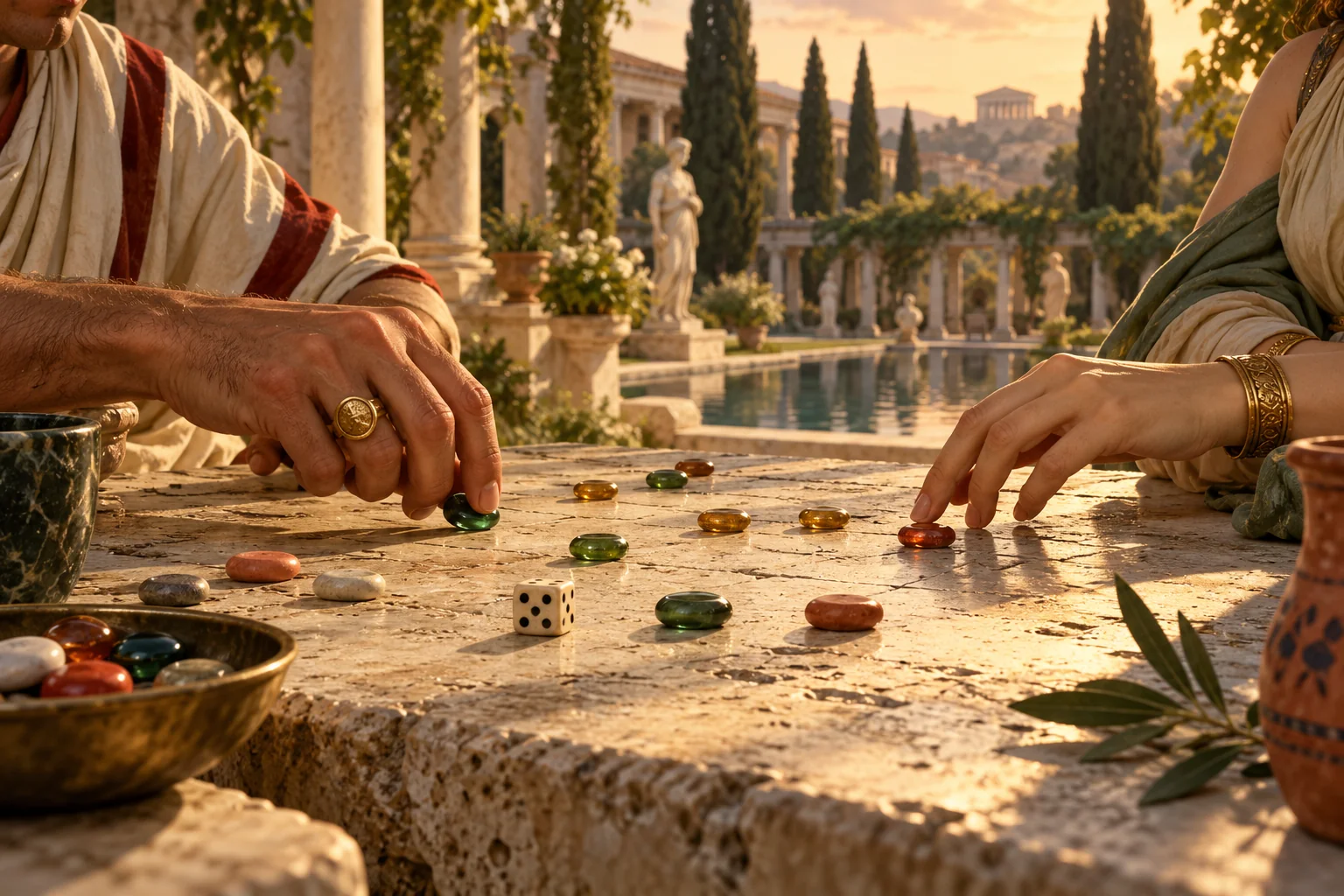
The Romans left behind gaming counters and dice, including examples found at Lullingstone Roman Villa in Kent. They are a lovely reminder that people have long enjoyed sitting down together and seeing who can outthink whom.
You may come across the name terni lapilli when reading about Roman games of making a line. The rules you find today are reconstructions, so it is worth treating them as a way to explore the past. Some versions use a few counters that move once they have all been placed. That gives you rather different puzzles from our Xs and Os, which stay where you put them.
Sources: [3]
A board built into the surroundings
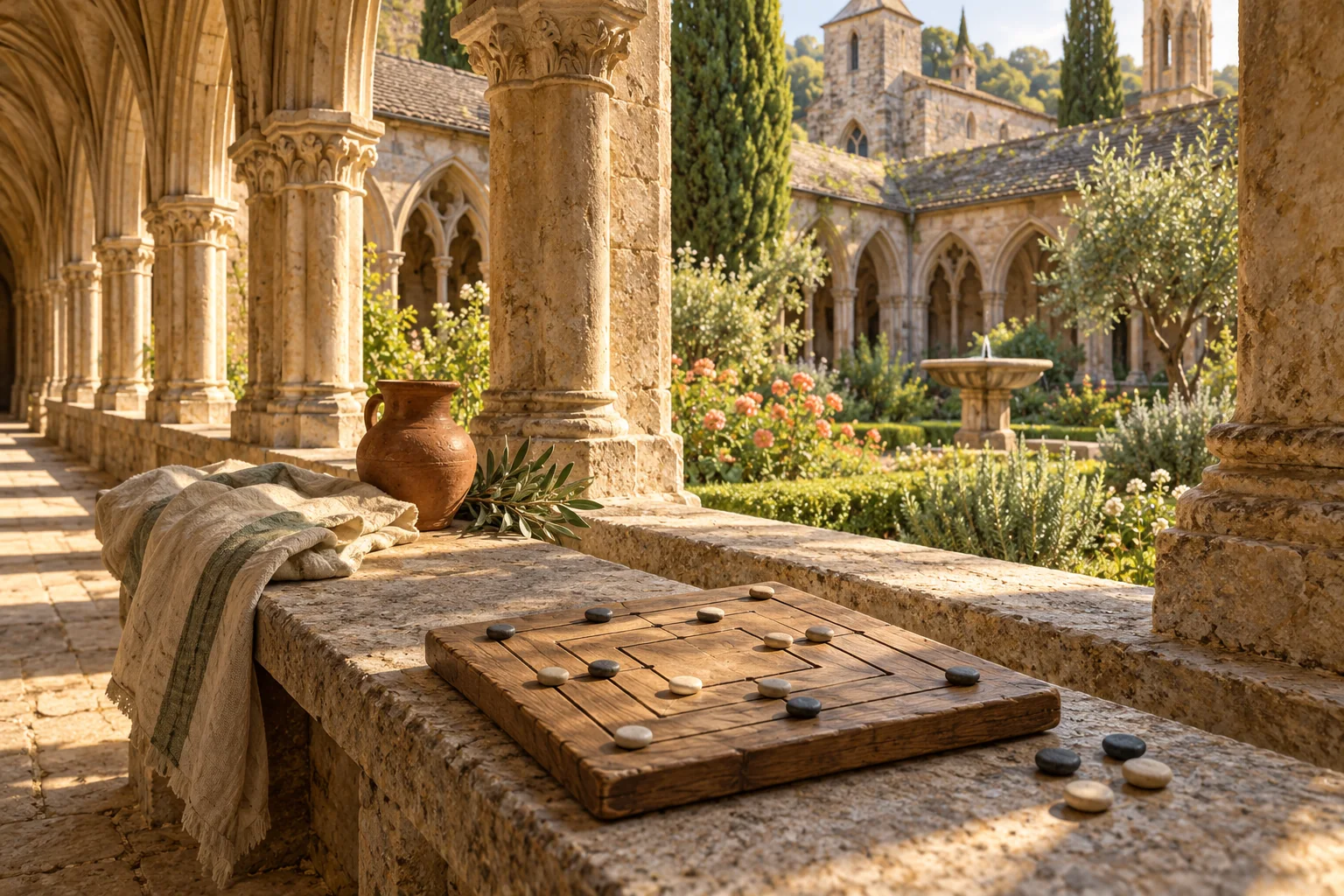
A portable board is handy, but a flat stone surface will do nicely. English Heritage describes medieval merrills, or Nine Men’s Morris, boards made from different materials, with some cut into parts of buildings. One surviving example from Wharram Percy dates to the 13th century.
Morris shares the pleasure of trying to make a line, although its moving pieces and captures give it a personality of its own. Think of it as a relative worth meeting. You will want to learn its rules before assuming your favourite tic-tac-toe trick will work.
Sources: [2]
One little game, quite a few names
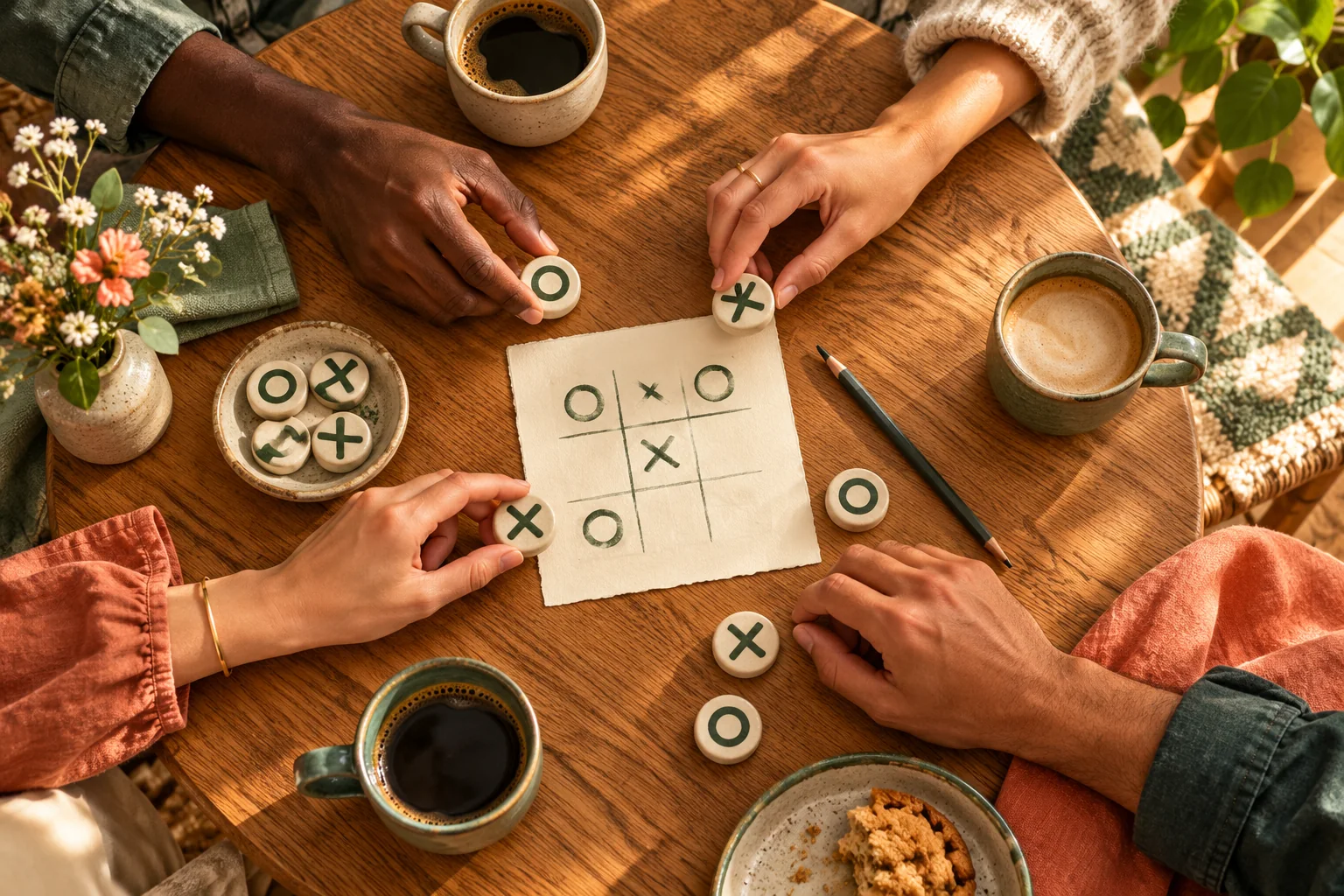
In Britain, it is usually noughts and crosses. In the United States, tic-tac-toe. In Spain, tres en raya tells you what you are aiming for: three in a line. The Spanish dictionary even describes counters placed where lines meet, showing how a familiar idea can look a little different on a physical board.
In Portugal you will hear jogo do galo; in Brazil, jogo da velha. Priberam records both names for the familiar nine-space game. Paper, pebbles, a wooden board or a phone screen: it does not take much equipment to get a game going.
If someone shows you their own version, agree a few things first. Do the pieces stay put? Can you move them later? Do diagonals count? And how many in a row wins? Sorting that out takes a moment and saves a surprisingly lively discussion halfway through.
| Name or setting | What to check |
|---|---|
| Noughts and crosses / tic-tac-toe | Usually the classic 3×3 placement game |
| Tres en raya | Three-in-a-line terminology; agree the board and placement rules |
| Jogo do galo / jogo da velha | Portuguese and Brazilian names for the nine-space game |
| Sliding-counter variants | Pieces may move after placement; not our permanent-mark rules |
By 1952, it was the computer’s turn
Long before games fitted in your pocket, noughts and crosses was already finding its way onto a computer. Cambridge’s EDSAC archive lists OXO, written by A. S. Douglas in 1952. The tiny grid had made a rather big leap from the tabletop.
It is still a friendly way to understand how a computer plans a move. It tries a possibility, thinks about your best reply and looks at where that might lead. You can leave the sums to the machine and concentrate on giving it something awkward to deal with.
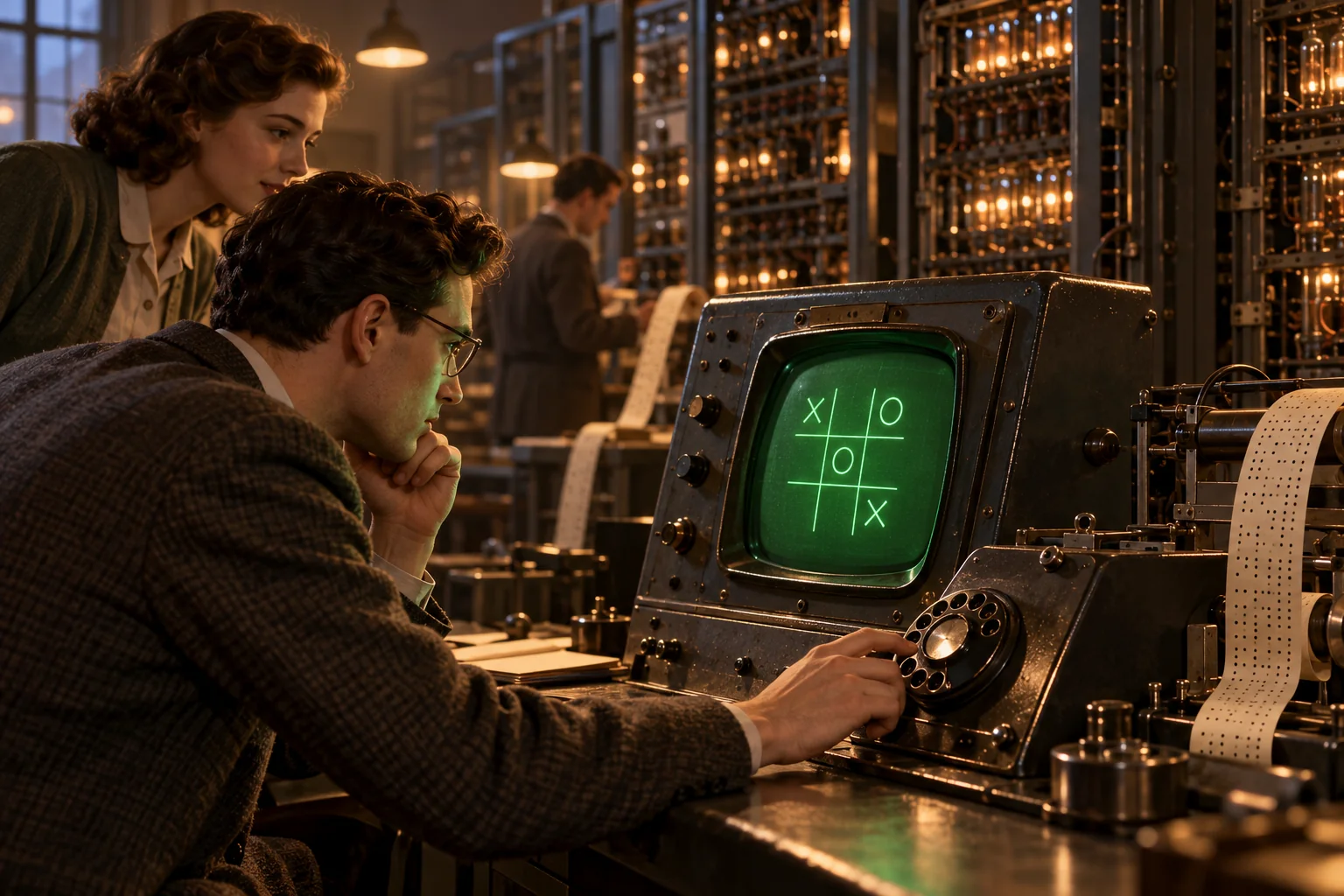
Tri: the little classic you know
Fancy the familiar game? Start with Tri. Nine squares, eight possible winning lines and three marks needed to finish one. The centre and corners are useful places to build from, but check for a win or an urgent block before getting carried away with a clever plan.
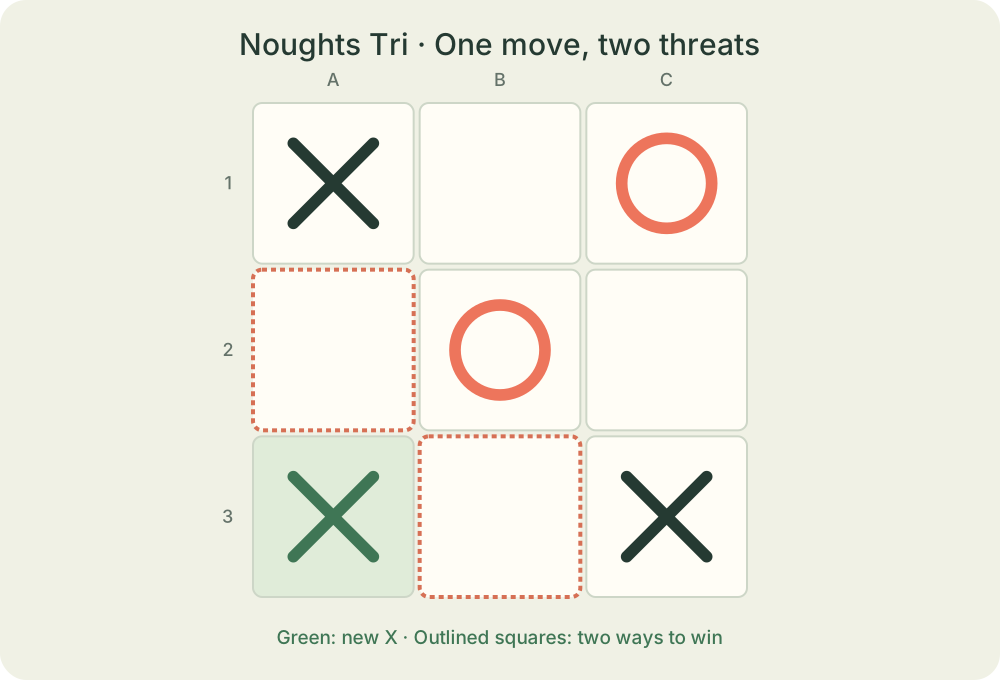
The satisfying trick to learn is a fork: one move that leaves you two different places to win next time. Your opponent can only block one. Against perfect play, though, classic tic-tac-toe ends in a draw. Holding your own against Expert is a good result. Casual gives you more chances to catch the computer out.
Sources: [5]
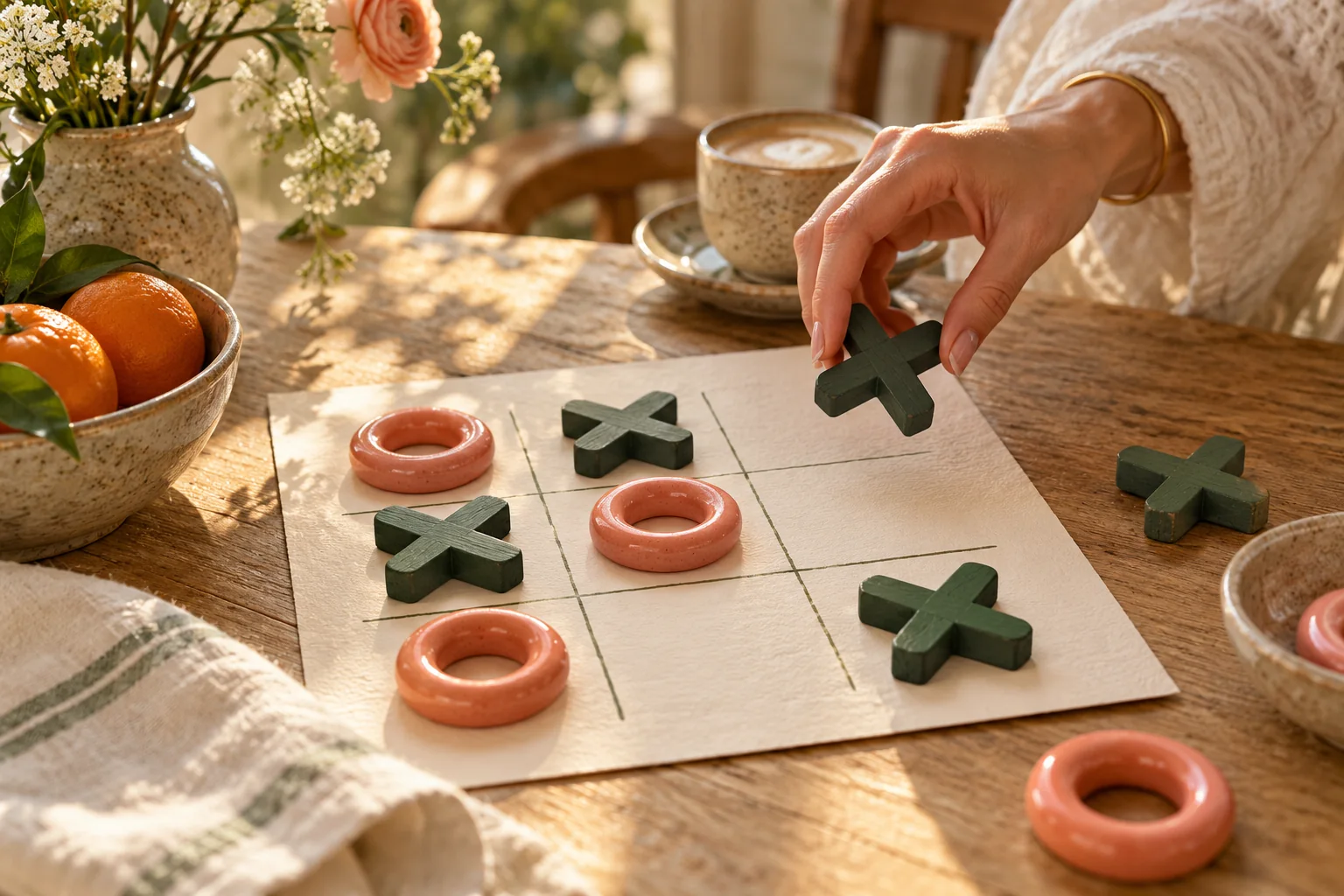
Quad: a little more room to plot
Quad stretches the board to 4×4 and asks for four in a row. You need a whole row, column or one of the two long diagonals. Three marks might make your opponent sit up and pay attention, but you still need that fourth square.
Try working on two open lines that meet at an empty square. Playing there might leave two ways to finish. Just make sure they need different final squares: if both plans end in the same place, your opponent has a rather convenient answer to both.
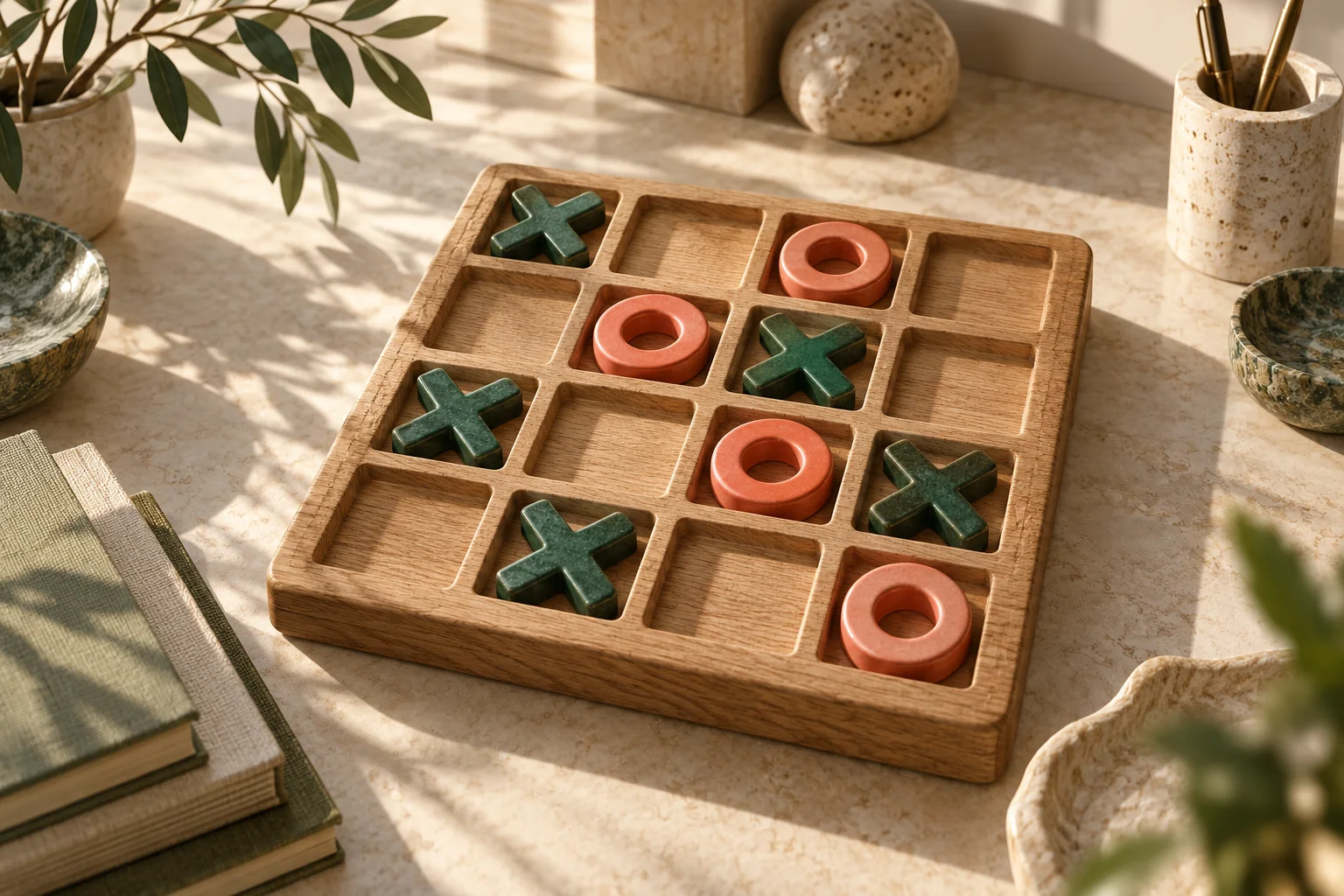
Quint: more space, still four to win
Quint gives you a 5×5 board, while keeping the target at four in a row. Your line can now sit inside a longer row, or run along a diagonal that misses the centre. There are twenty-eight possible winning stretches of four, so it pays to look around.
Here is a useful pattern to watch for: three marks together, with a free square at each end. You could finish at either end next turn. Before enjoying your moment of brilliance, check that both squares really are free and your opponent cannot win somewhere else first.
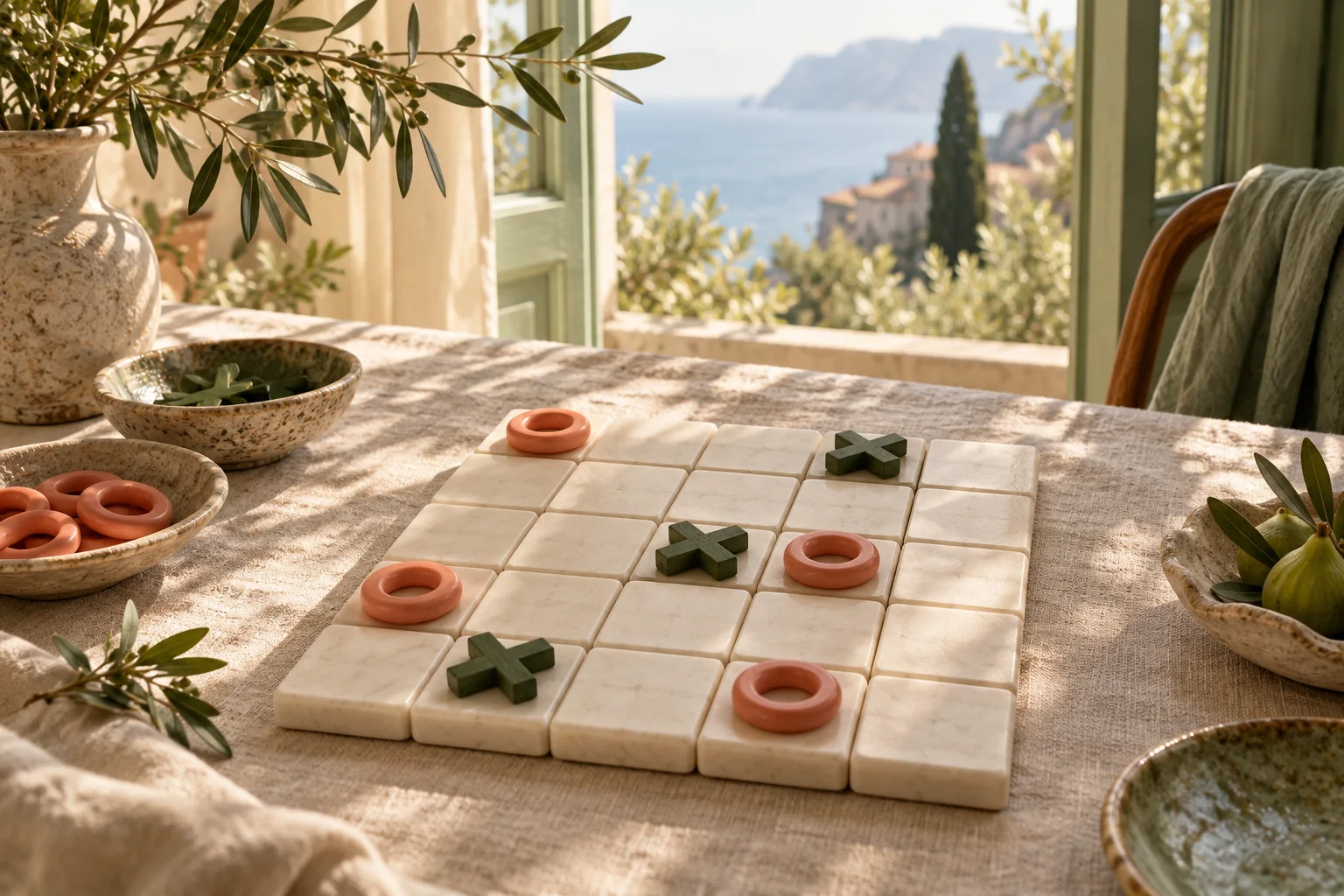
Hexa: five in a row and a longer plan
Hexa is our biggest board: six squares across, thirty-six to play on and five in a row to win. There is room to build a couple of connected plans. Keep an eye on four marks with a free square at both ends; that can become a very awkward problem for the other player.
If you know Gomoku or Renju, the idea of making a line will feel familiar, but Hexa uses our own small-board rules rather than their official tournament rules. And if you were looking for Noughts Hex, that is our separate colour puzzle. Hexa is the one with Xs, Os and a little more space to think.
Where should you start?
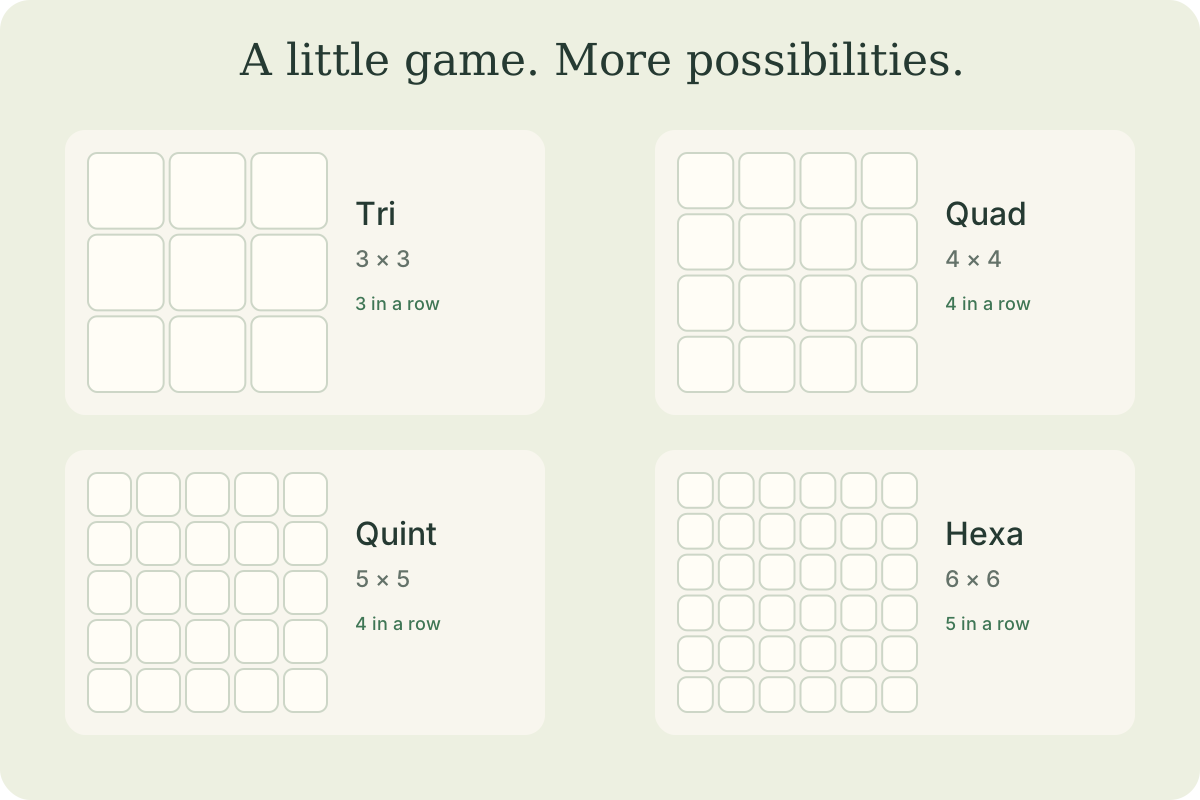
Pick the board that suits your mood. Tri is quick and familiar; Quad lets you stretch out a plan; Quint brings more angles to watch; Hexa gives you the longest lines to build. The names tell you the board size, while the table below shows what you need to win.
Every version lets you play the computer at three levels, or pass the device between two people. There is no account to set up. Choose a board and have a go.
| Game | Board | Target | Good for |
|---|---|---|---|
| Tri | 3×3 | 3 in a row | Learning blocks and forks |
| Quad | 4×4 | 4 in a row | Building crossing plans |
| Quint | 5×5 | 4 in a row | Open ends and offset diagonals |
| Hexa | 6×6 | 5 in a row | Longer connected attacks |
A few small habits that help
Before you tap, take a little look around. Can you win now? Does your opponent have a line you need to stop? Could you make two threats at once, or accidentally let them do it? Those simple checks will take you a surprisingly long way.
When you fancy going a bit further, each game has its own tips and worked example beneath the board. They explain what to look for rather than ask you to memorise a string of moves. On the bigger boards, Expert plans ahead and spots traps, but you can still try to outwit it.
A little hourglass, without the hurry
The timer adds something else to play for: your own best winning time. Against the computer it counts the time you spend thinking, leaving out its turns. It also pauses when you leave the tab. Each grid and difficulty has its own record, saved in your browser.
Get comfortable first, then see whether you can make good decisions a little faster. The sand is there to nudge you along; it will never snatch your turn away. With two people, the clock shows your combined playing time, without setting a personal-best record.
A few things you might be wondering
Is it free? Yes. All four Crosses games are free to play, whether you choose the computer or a friend sharing your screen.
Can I always win at tic-tac-toe? A perfect opponent can hold you to a draw on the classic 3×3 board. A draw can be a well-played game.
Does a 5×5 board mean five in a row? It is an easy assumption to make, but our Quint needs four. Hexa is the one that asks for five, on its 6×6 board.
Which one should I try first? Tri on Casual is a friendly starting point. Move on whenever you fancy a different challenge; there is no entrance exam for the bigger boards.