Read aloud together
Let's learn numbers together!
A friendly introduction to counting, addition, subtraction, multiplication, division and number patterns for children around ages 5–7. Read it together or explore independently, and try each challenge on Junior.
Number discovery 1
Every number tells a story
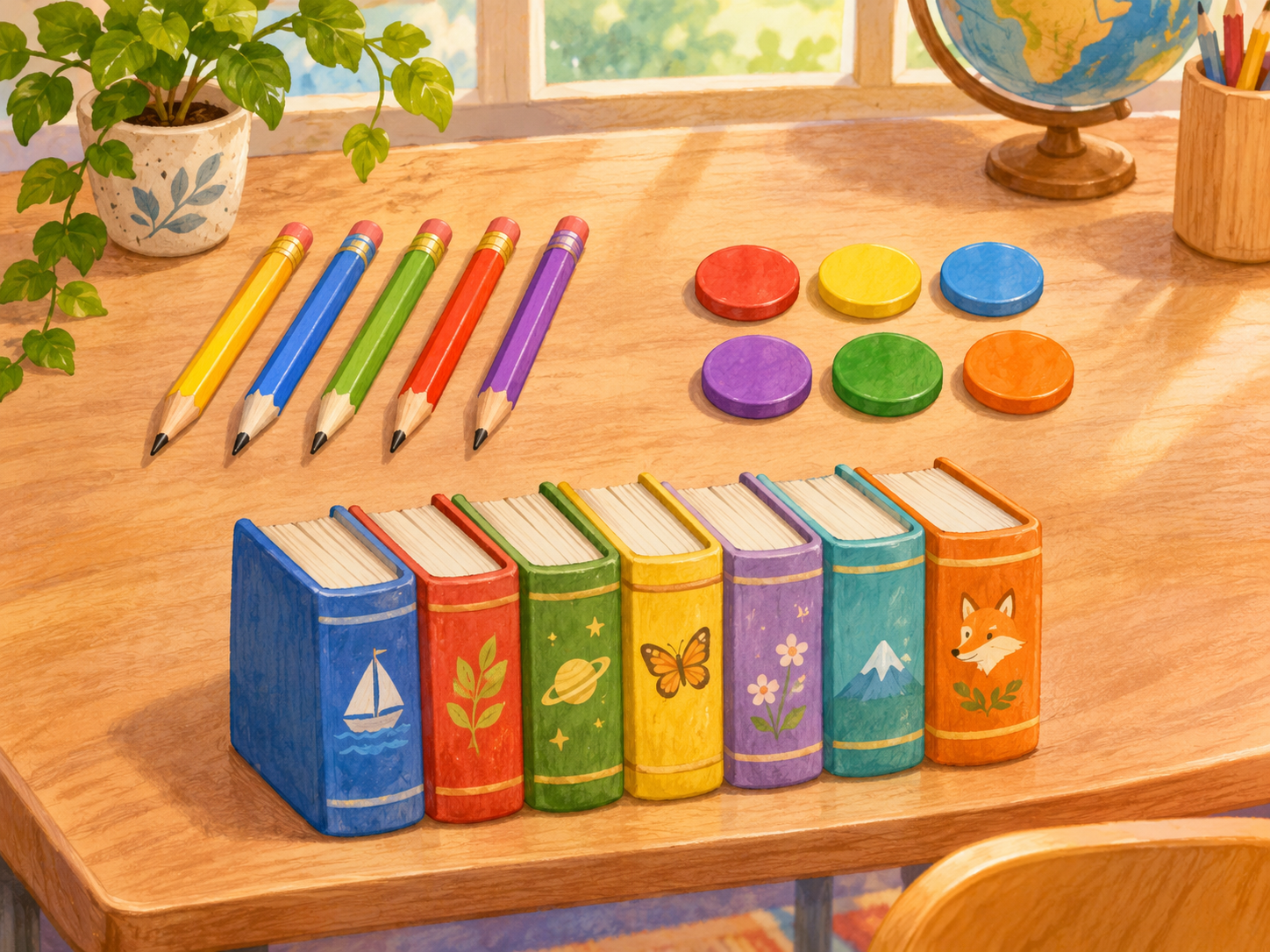
Why do we need numbers? Think about five footballs, six pencils or seven books. Numbers tell us how many things there are. Count a group, then add one more. What happens to the number? It grows by one.
Number discovery 2
The little beads help us count
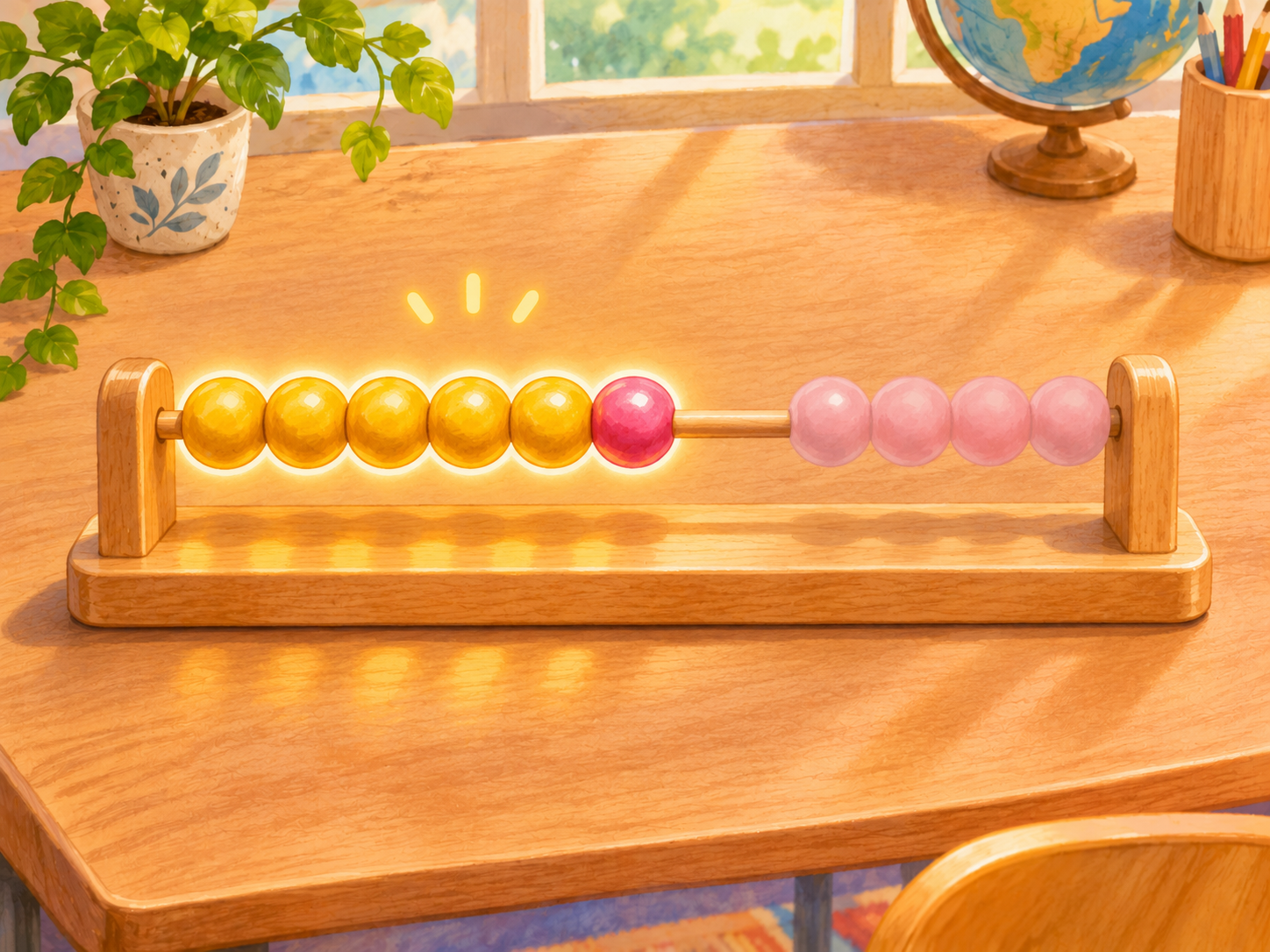
The bead bar gives you a way to see a number, not just read it. Press 6 and watch six beads move across and glow. The four faded beads are not part of the number. Can you recognise six without counting every bead?
Number discovery 3
Zero is a number too
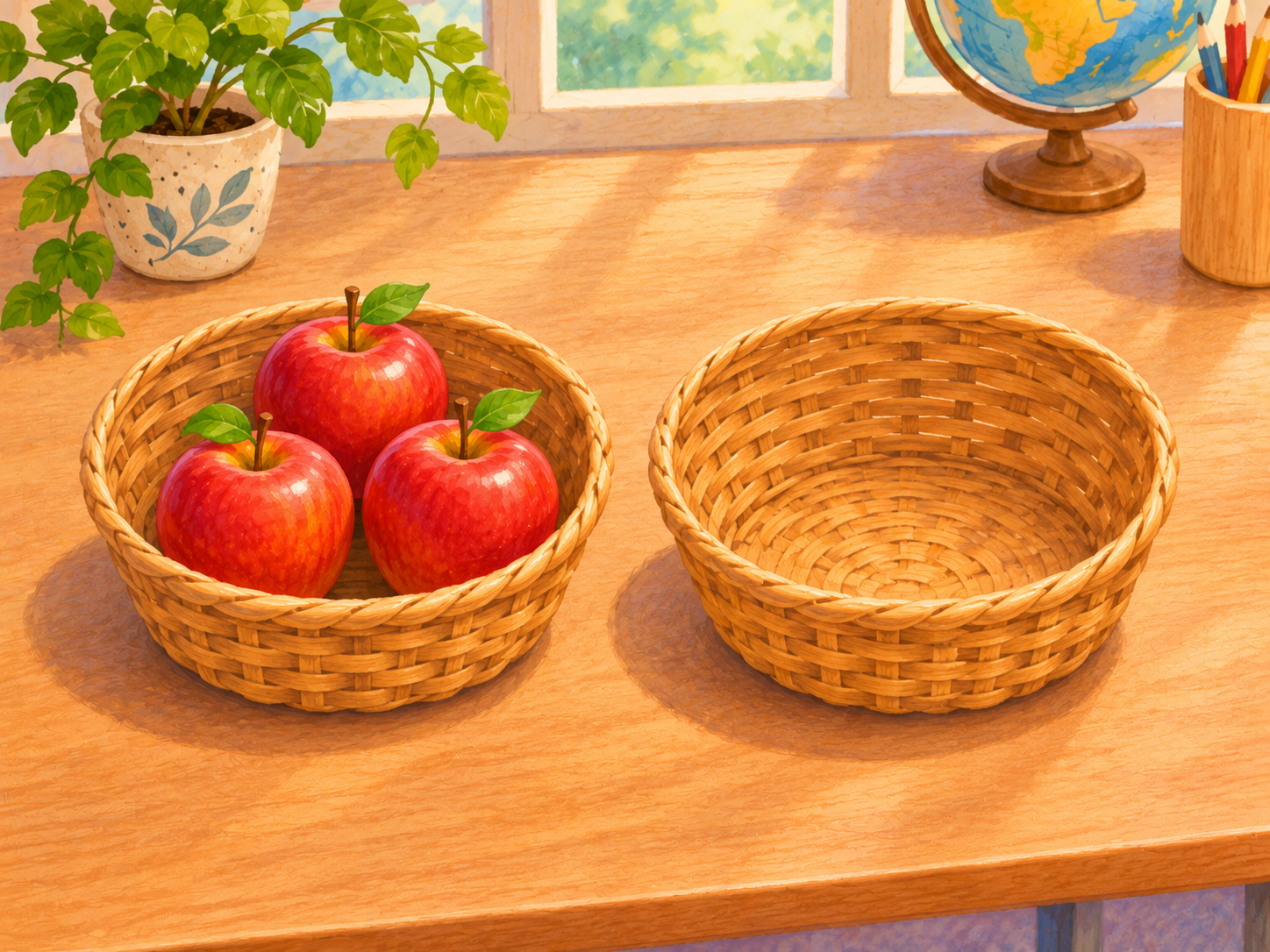
Zero means there is nothing in a group. Imagine having four counters and moving every one away. You have zero counters left. But zero is still an important number: it helps us count, calculate and even write numbers such as 10 and 100.
Number discovery 4
Let's put things together
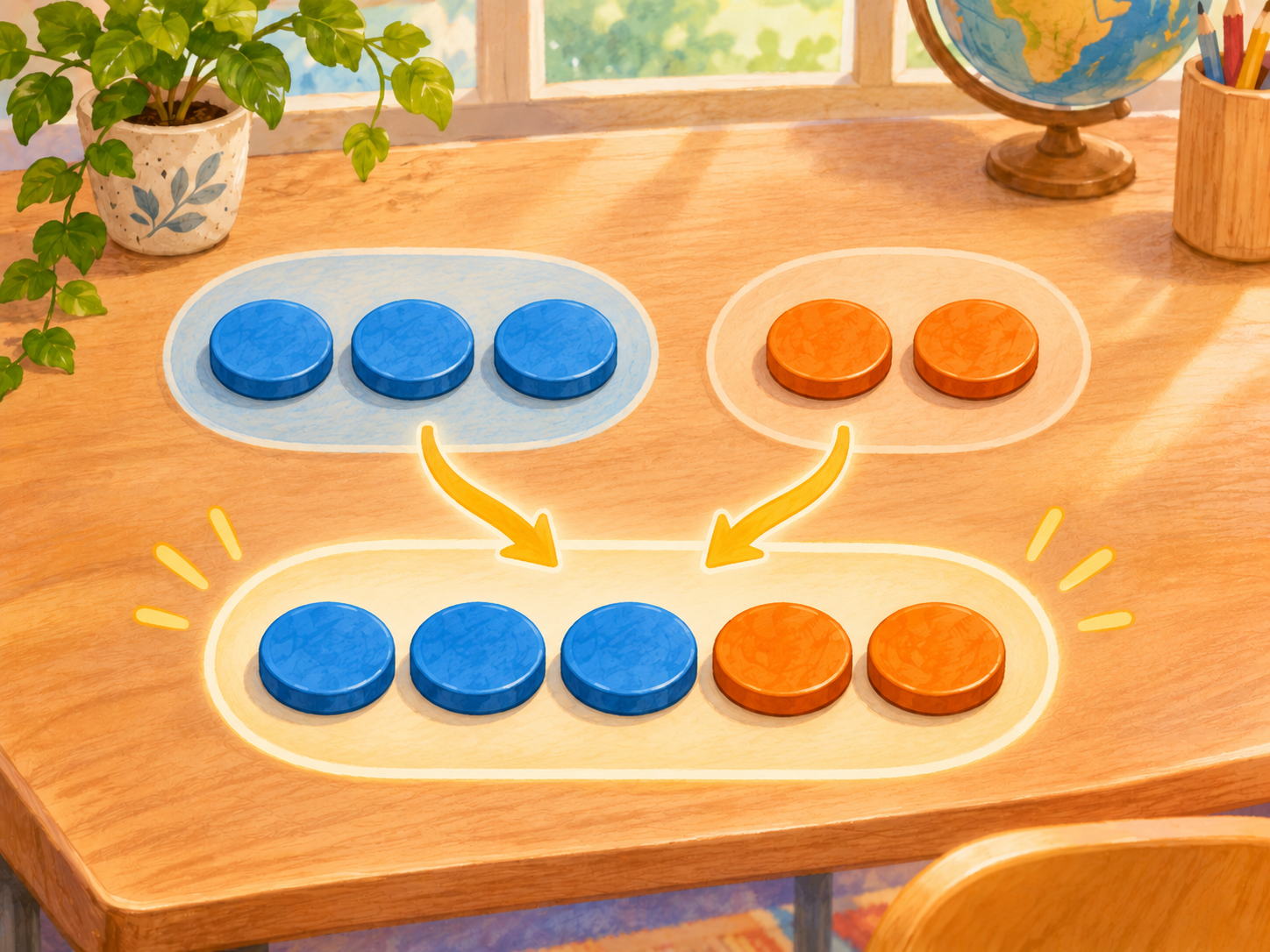
Suppose you have three points in a game and earn two more. How many points do you have altogether? That's addition: 3 + 2 = 5. The plus sign asks us to combine amounts, and the equals sign tells us the result.
Number discovery 5
When one goes away
Imagine you have eight building blocks and use three to make a tower. How many are left? Subtraction helps us find out: 8 − 3 = 5. The minus sign tells us to take an amount away.
Number discovery 6
Your hands have a counting secret
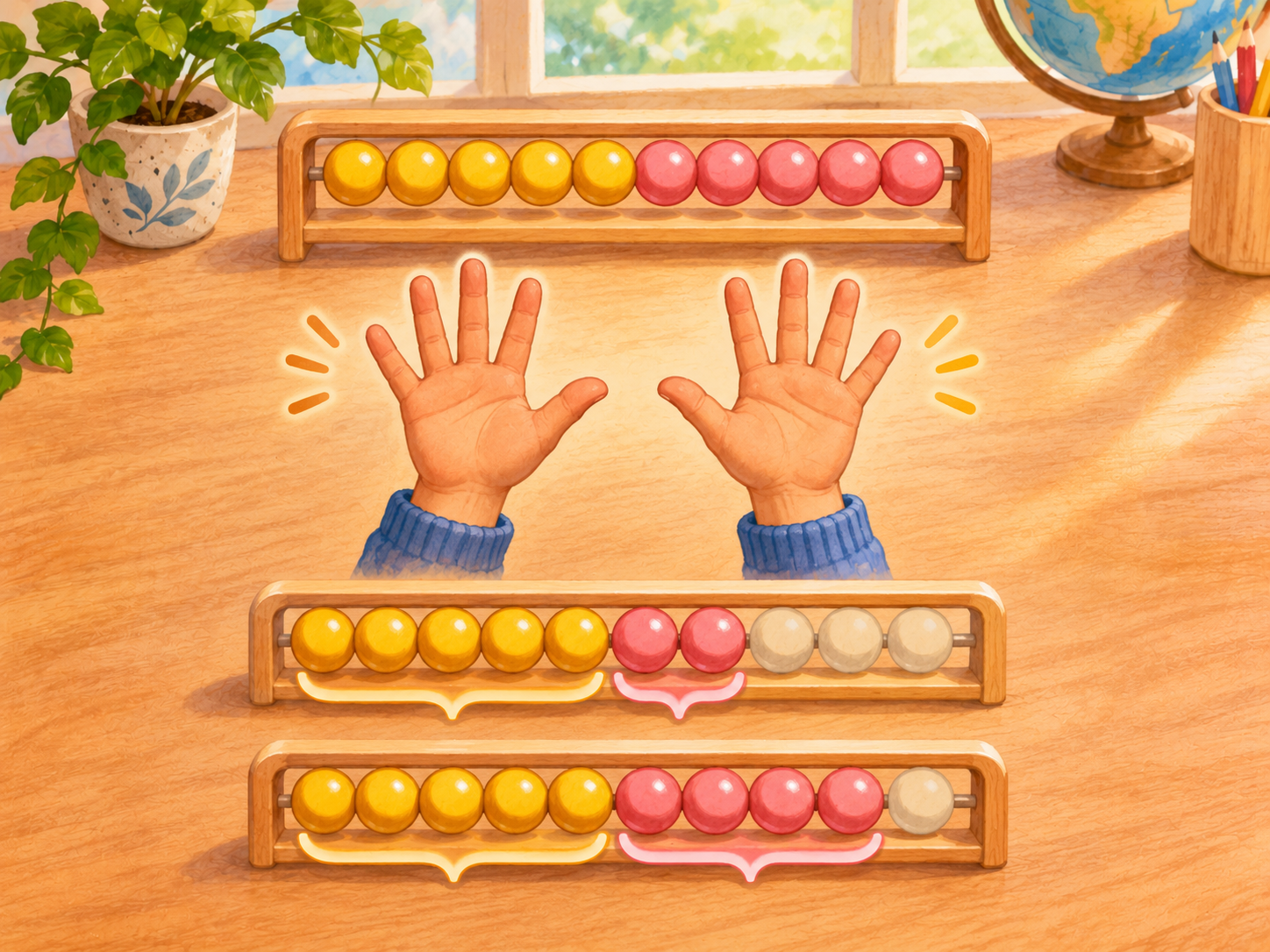
There is a useful shortcut hidden in the bead colours. One set of five is gold and the next five are pink. That means 7 can be seen as 5 + 2, and 9 as 5 + 4. Spotting groups of five can make mental maths quicker.
Number discovery 7
Numbers travel the world
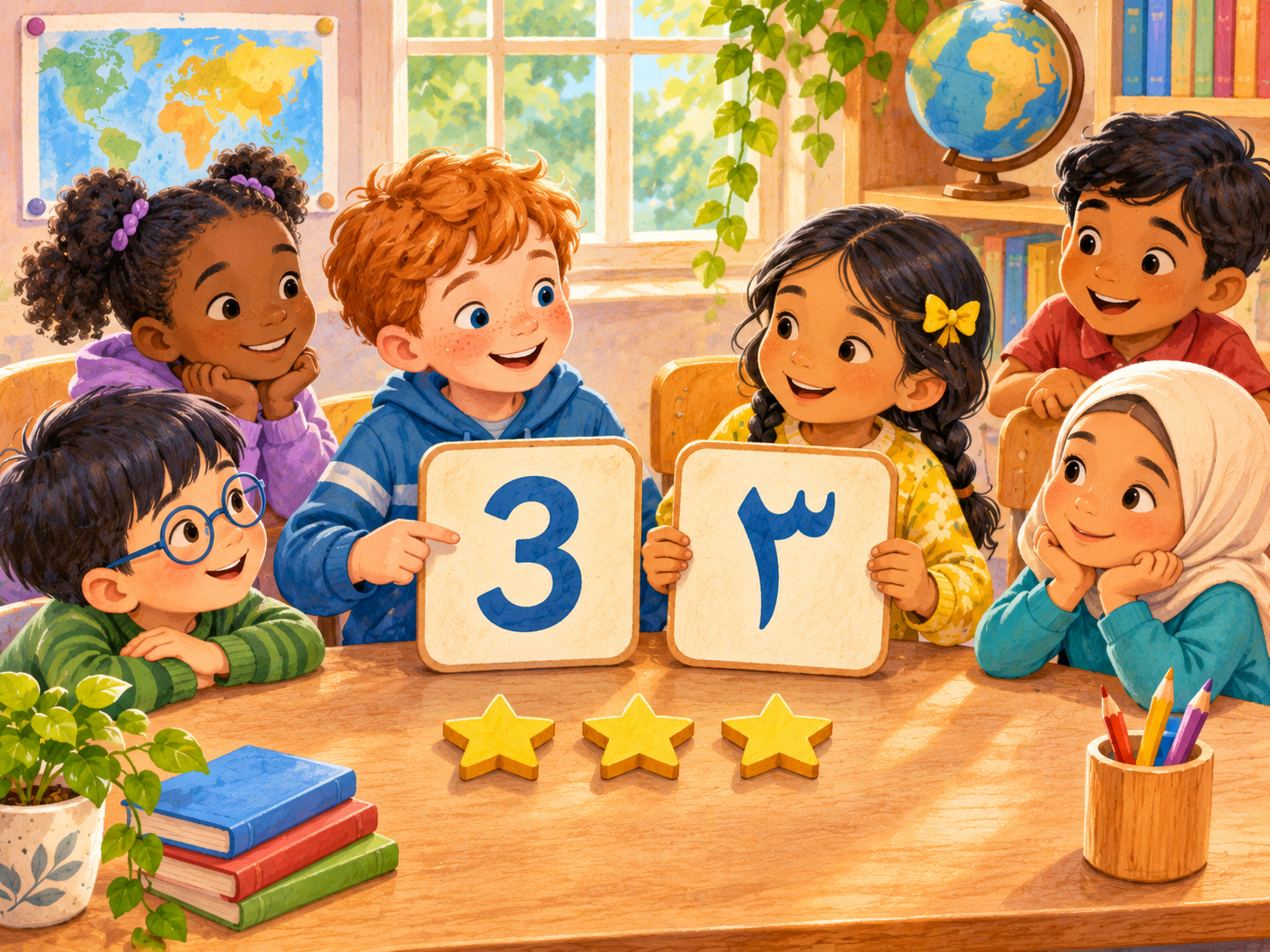
Numbers work in every language, even when their names or written symbols are different. In English we count one, two, three. In Standard Arabic, those numbers are واحد، اثنان، ثلاثة. Try the flags and listen: the pronunciation changes, but the quantity stays the same.
Number discovery 8
Let's play again
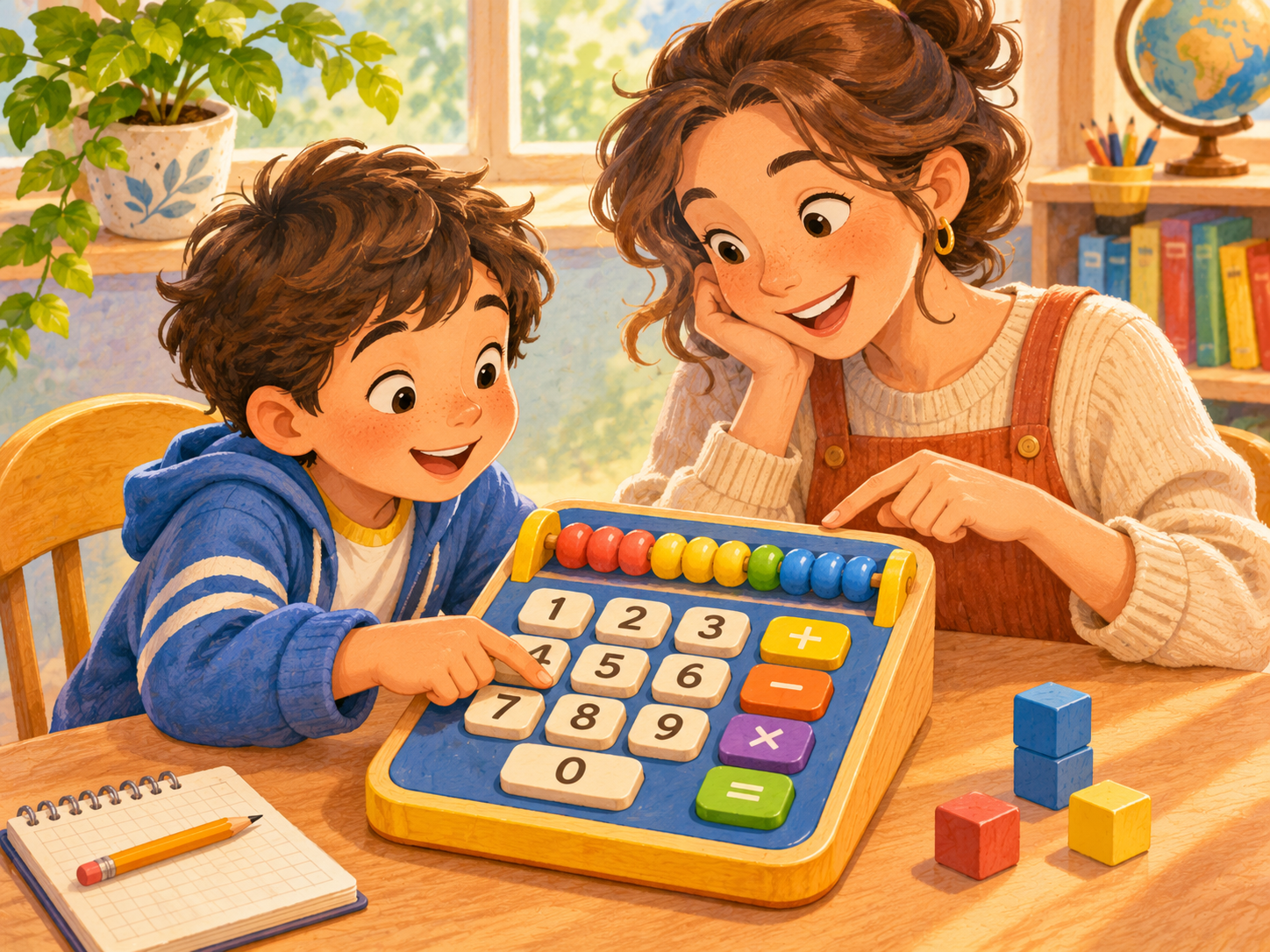
Ready to experiment? Try making your own sums and predict the answer before pressing equals. If the result surprises you, that's a chance to explore why. Use New sum whenever you're ready for a fresh challenge.
Number discovery 9
Multiplication is equal groups
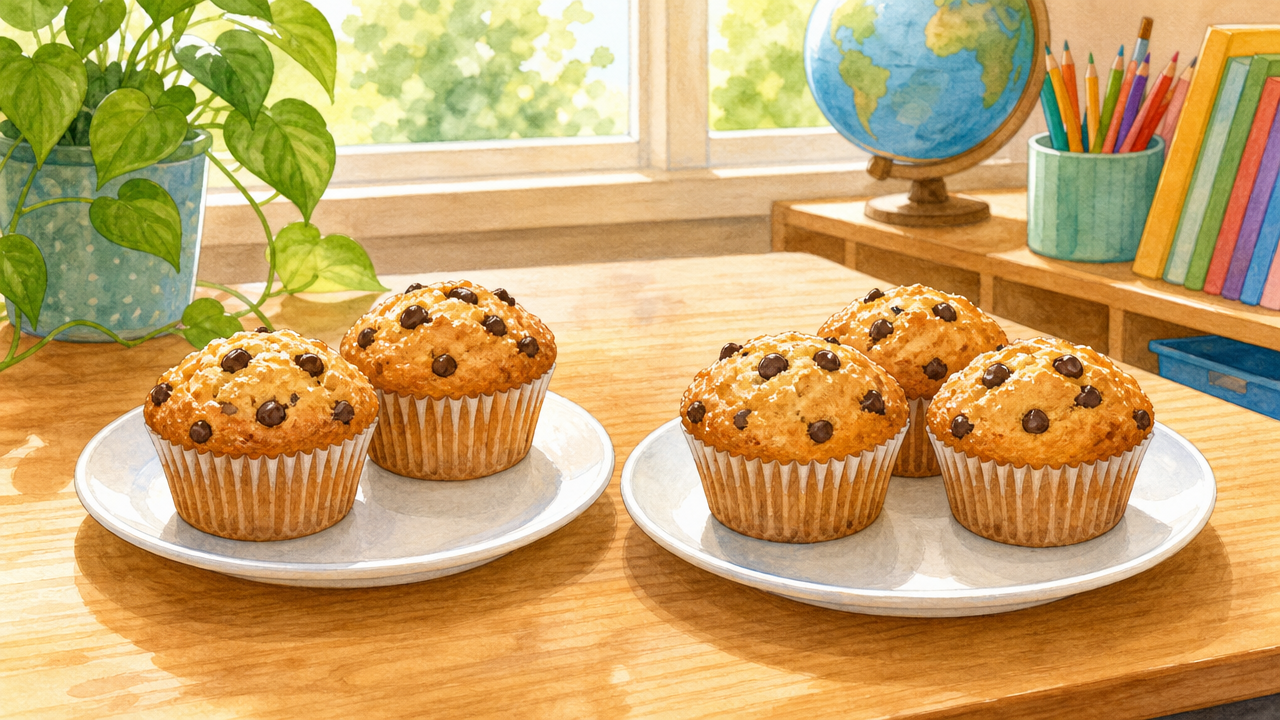
Multiplication is a shortcut when we have groups of the same size. Imagine two plates with three biscuits on each. That's three plus three, or 2 × 3 = 6. The times sign means equal groups added together.
Number discovery 10
Division means sharing fairly
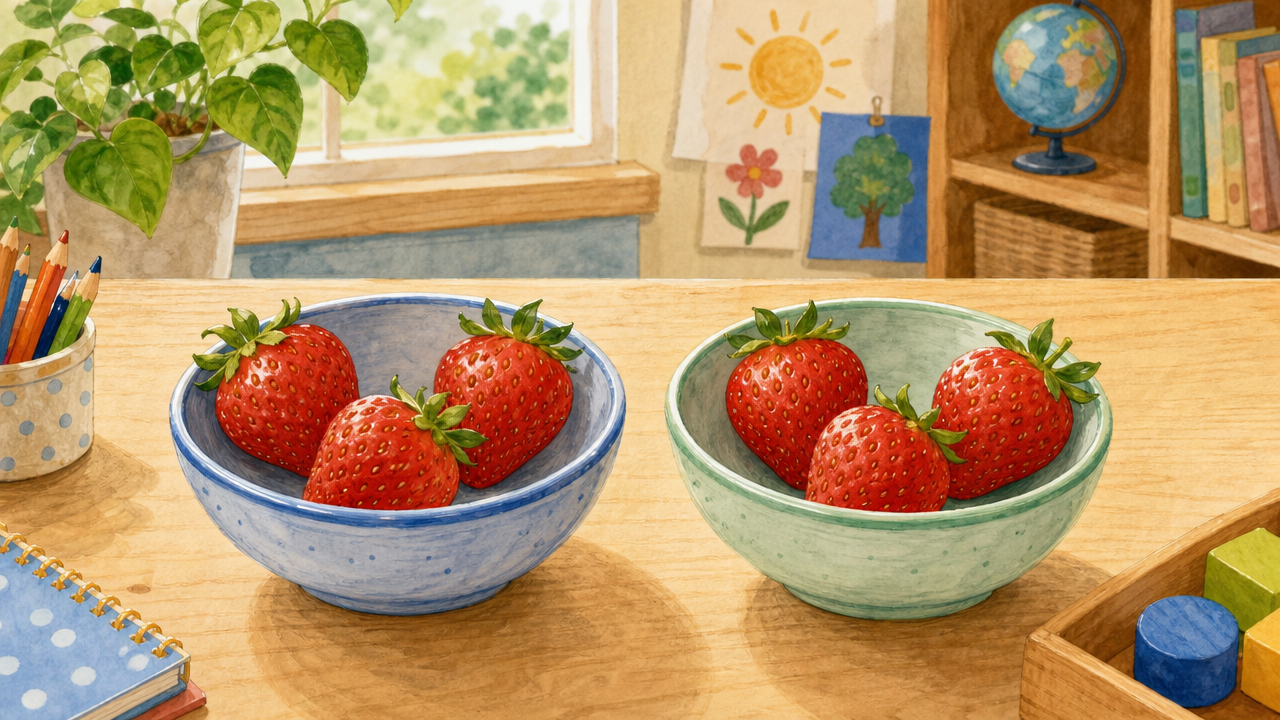
You have six strawberries and two friends want to share them equally. Give one to each friend, then another, until all six are shared. Each friend gets three. We write 6 ÷ 2 = 3. Division helps us make equal groups.
Number discovery 11
Can you spot a number pattern?
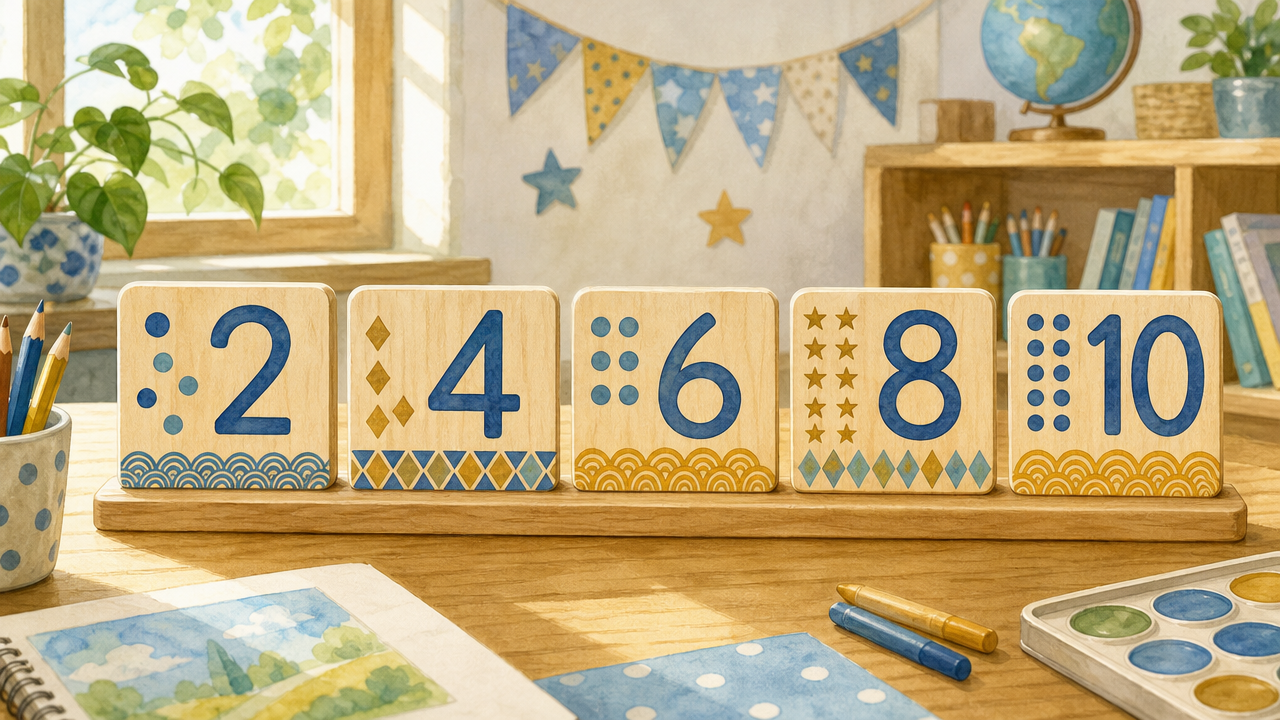
Some numbers follow a pattern. Look at 2, 4, 6, 8, 10. Each number is two more than the one before. You can make other patterns by adding one, three or five each time. What might come next?
Number discovery 12
Even numbers make pairs
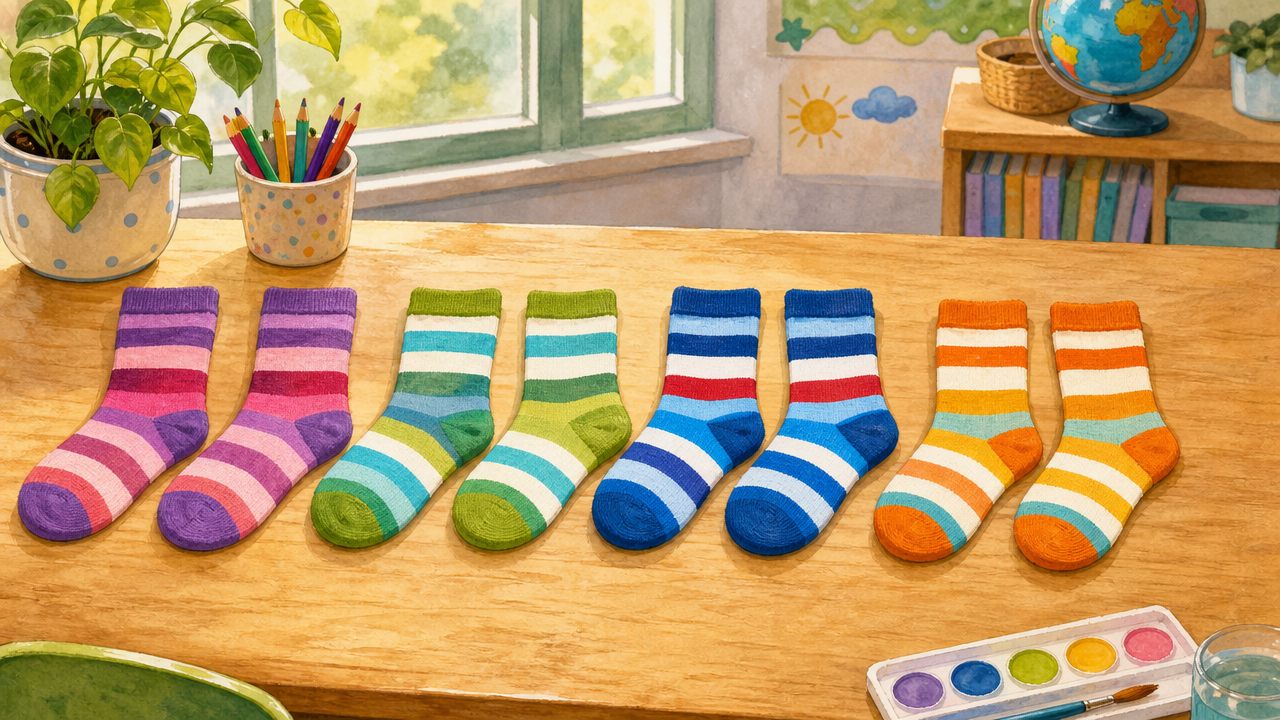
Suppose every sock needs a partner. With six socks, you can make three pairs. Six is even. But with seven socks, one would be left without a partner. Seven is odd. Try making pairs to discover which numbers are odd or even.
Number discovery 13
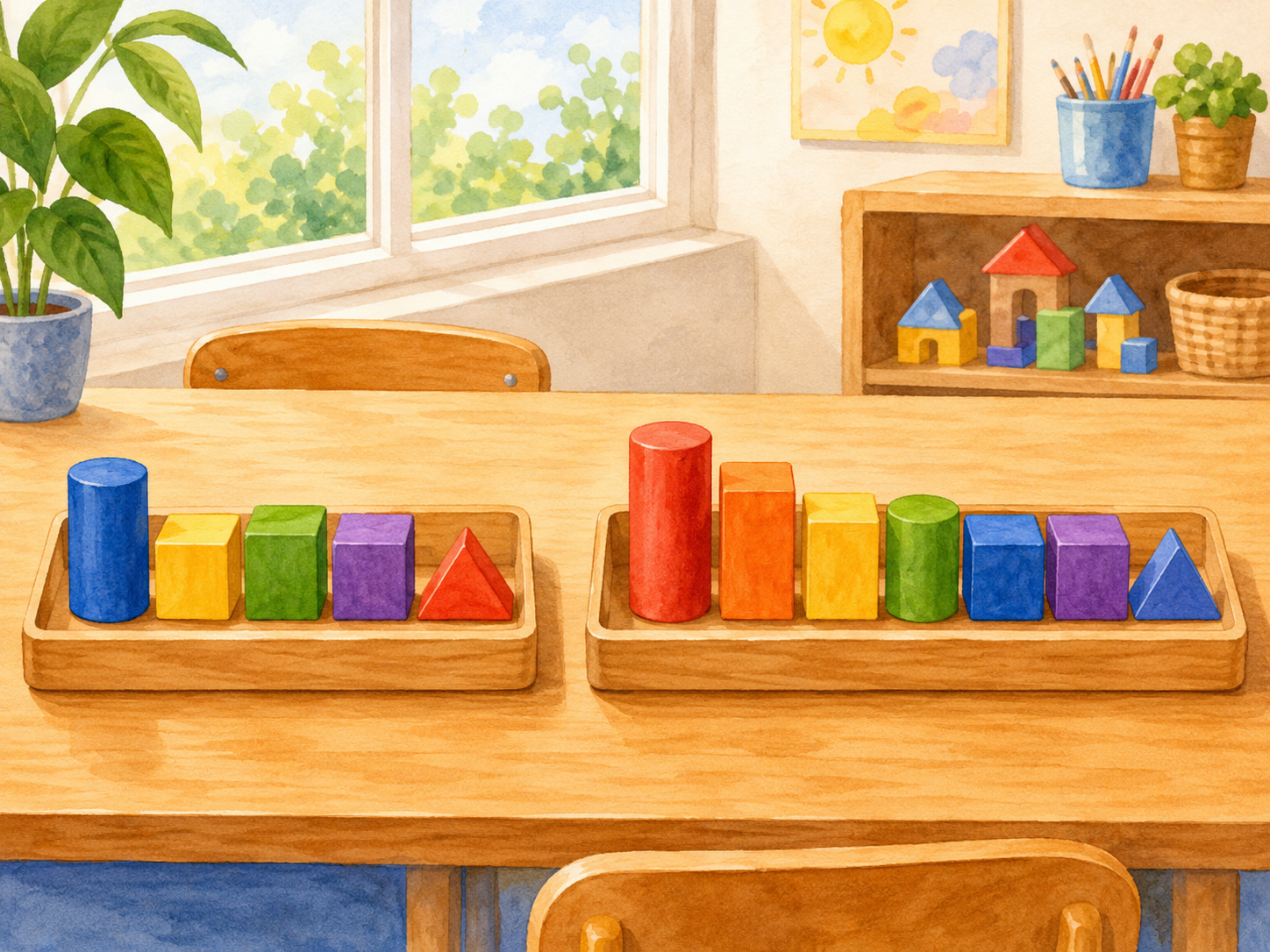
Bigger, smaller or the same?
Which is bigger, seven or five? Seven! It has two more. We can compare quantities by counting them, looking at groups, or lining objects up side by side. Sometimes two groups have exactly the same amount.
Number discovery 14
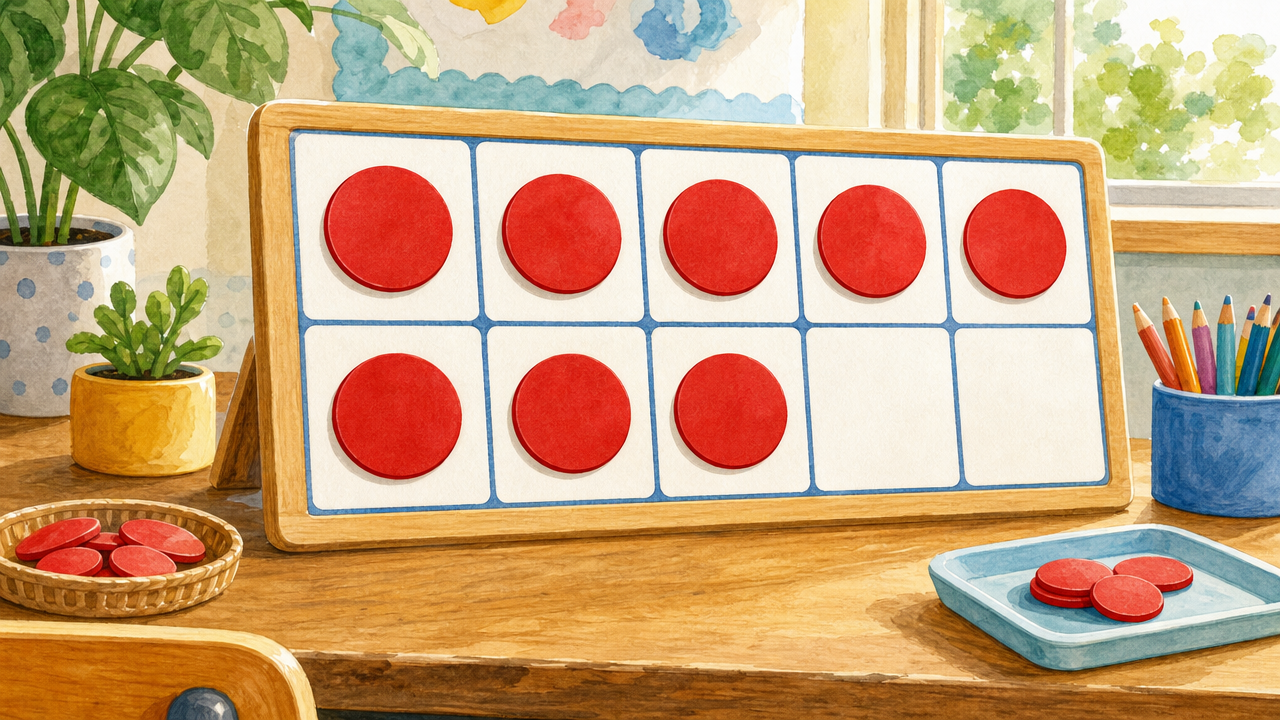
Make ten!
Ten is a very useful number. If you have eight counters, how many more would make ten? Two! That means 8 + 2 = 10. Try starting with six, seven or nine. Each time, ask yourself how many are missing.
Number discovery 15
Maths in everyday life
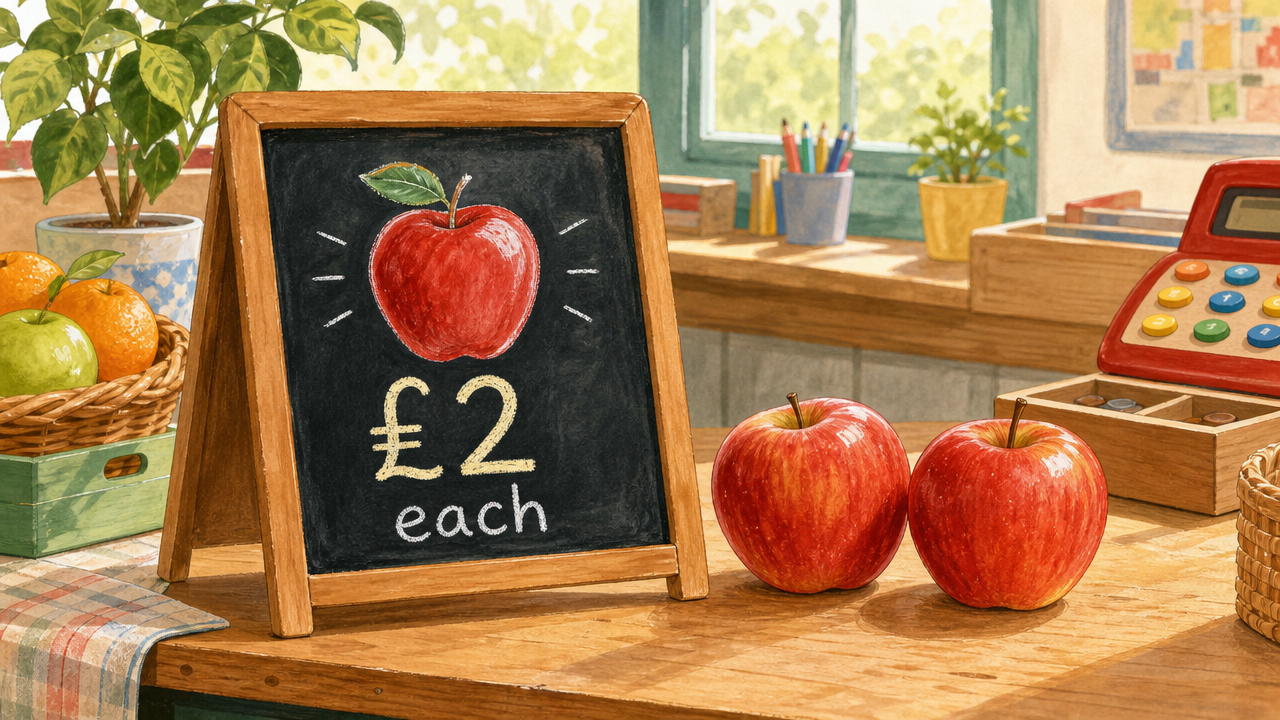
Numbers help us in shops, kitchens, games and journeys. Imagine apples cost two pounds each. If we buy two apples, we can add 2 + 2 to find four pounds. When we're learning, it's fine to use our fingers or draw pictures.
Number discovery 16
Be a number explorer!
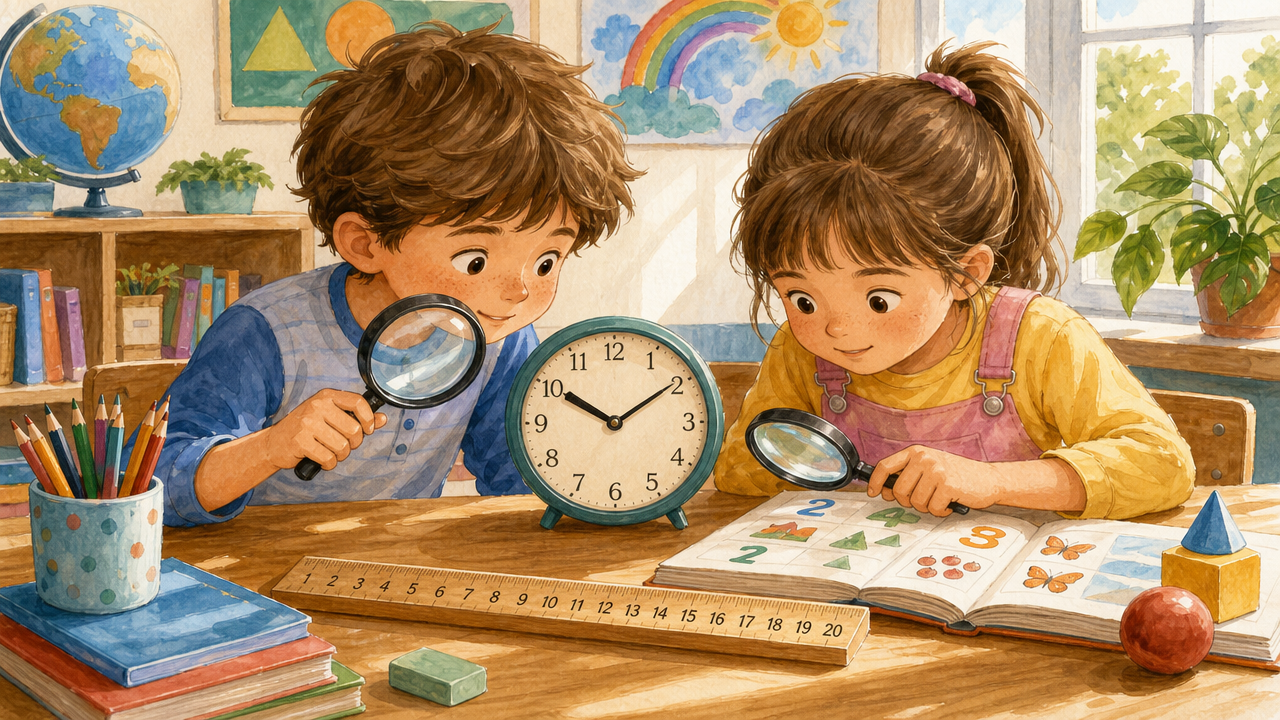
Numbers are hiding everywhere. You might spot them on a clock, a bus, a ruler or a birthday card. Some tell us how many, while others help us measure or keep track of time. Can you discover a number you haven't thought about before?